

It doesn’t https://www.bookstime.com/articles/how-to-prevent-duplicate-payments always capture all the nuances of an investment, like the time it takes to see a return or the potential for unexpected costs. Always do your homework and consider all the factors before making a decision. You need to consider other factors like risk, time, and opportunity cost to get the full picture. Additionally, ROI can be misleading if the initial investment is large. This is because the percentage return may appear impressive, but the actual profit may be relatively small compared to the risk taken.

Is Rate of Return the Same As Return on Investment?
When used effectively, leverage can magnify an investment’s returns. However, it is important to use leverage carefully, as it can also magnify losses. For example, if an investment of $1,000 generates a net income of $200, the ROI would be 20%. This means that the investment generated a return of $0.20 for every $1 invested.
- EBITDA Margin is ideal for operational performance analysis, while ROI focuses more on the financial returns of specific investments.
- In this article, we will break down what ROI means, why it matters, and how to calculate it effectively.
- Total costs include the initial purchase price and any trading commissions paid.
- ROA is a better metric for evaluating companies with significant physical assets, while ROI serves broader investment comparisons.
- ROI isn’t just about whether you made money or lost it; the percentage tells you how much you made or lost relative to your initial investment.
- This comprehensive guide will explore the concept of ROI, its calculation methods, benchmarks across different industries for return on capital, and strategies for optimisation.
Common Mistakes in ROI Calculation
- Some returns are much greater depending on the type of investment and the timeframe.
- For example, a tech company might use ROI to decide if developing a new software feature is worth the investment.
- The only variation in investments that must be considered is how costs and profits are accounted for.
- A more accurate calculation would consider inflation if you held the bond for several years.
- It helps investors see which options are performing better relative to their costs, allowing for more strategic financial planning.
- SROI helps understand the value proposition of specific environmental, social, and governance (ESG) criteria used in socially responsible investing (SRI) practices.
This comparative analysis empowers individuals to allocate their capital strategically, maximizing their chances of financial success. Finally, annualized ROI can also compare investments with different risk profiles. Higher-risk investments typically have the potential for higher returns but also have a greater chance of loss. By comparing the annualized ROI of different investments, investors can make informed decisions about which investments align with their risk tolerance and financial goals. Calculating ROI entails determining the ratio between the net income (or profit) obtained from an investment and the total cost incurred in making that investment.
- Interest on a second, or refinanced, loan may increase, and loan fees may be charged, both of which can reduce the ROI, when the new numbers are used in the ROI equation.
- By leveraging Salesforce’s power, businesses can gain valuable insights into their sales performance and make data-driven decisions to improve their sales ROI.
- The investment with the highest ROI is not necessarily the best option, as other factors may need to be considered.
- First, it is important to use the net income (or profit) after all expenses have been paid.
What is a term deposit and how does it work?
While there are nuances to consider, positive ROI is generally a step in the right direction. It’s also important to note the difference between a realized gain and unrealized gain. So-called learning ROI relates to the amount of information learned and retained as a return on education or skills training. As the world progresses and the economy changes, several other niche forms of ROI are sure to be developed in the future.

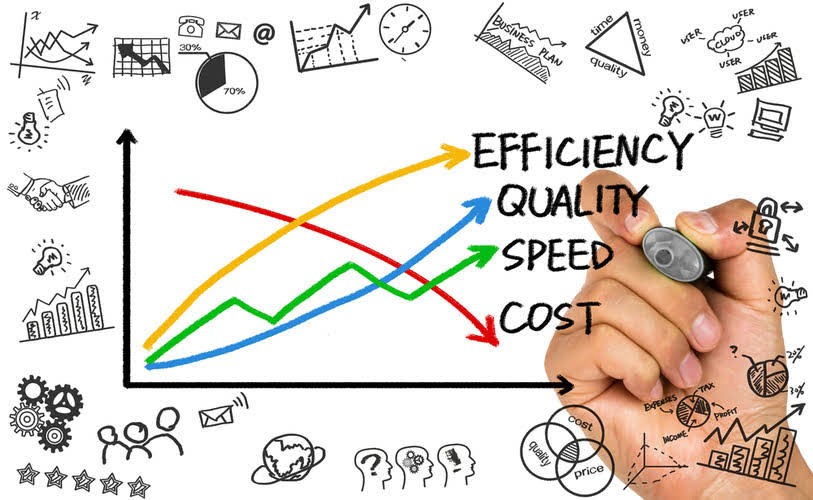
Understanding how to calculate ROI what is return on investment can help you understand which investments are paying off and which costs should simply be cut. Organizations use it to compare projects or departments, optimizing resource allocation. For instance, ROI can measure the effectiveness of marketing campaigns by comparing returns against costs. This analysis identifies high-performing initiatives, enabling better resource distribution. The most detailed measure of return is known as the Internal Rate of Return (IRR). This is a measure of all the cash flow received over the life of an investment, expressed as an annual percentage (%) growth rate.

- By understanding and applying ROI, businesses can make more informed decisions and improve their overall financial performance.
- In conclusion, grasping the concept of Return on Investment (ROI) is essential for anyone looking to make informed financial decisions.
- The biggest benefit of ROI is that it is a relatively uncomplicated metric.
- This comparative analysis empowers individuals to allocate their capital strategically, maximizing their chances of financial success.
- It doesn’t consider the holding period of an investment and it’s not adjusted for risk.
You can improve ROI by either increasing revenue/returns or reducing costs. If calculating simple ROI, that means you’re not factoring time into the equation. If comparing two investments, a higher ROI is generally better than a lower ROI, https://piladoragenesis.com/2023/03/09/the-difference-between-the-balance-sheet-and/ as it indicates more profitability.